Publications

Journal Articles


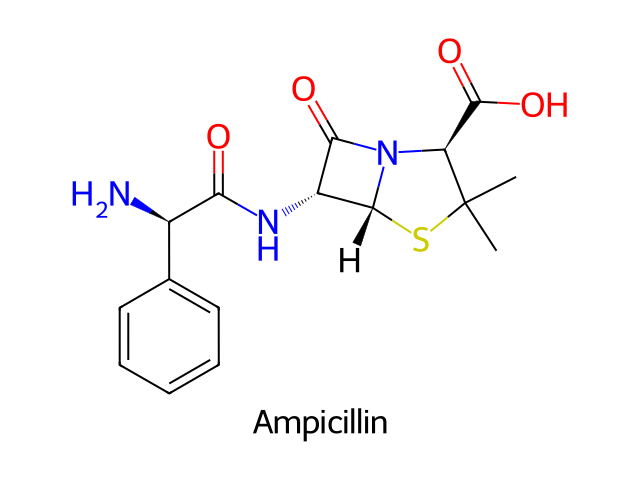
Chemical structure of ampicillin

Direct electrochemical sensing of ampicillin in aqueous media by a ruthenium oxide electrode decorated with a molecularly imprinted polymer Permalink

Published in Talanta, 2025

A sensor that measures the antibiotic ampicillin directly in water. A molecularly imprinted polymer on a ruthenium oxide electrode recognises ampicillin, and the ruthenium oxide itself provides the redox signal, so no added probe solution is needed. Detection limit 6 nM; 98–114 % recovery in pond water.
Recommended citation: Vu Bao Chau Nguyen, J. Reut, A.G. Ayankojo, V. Syritski. Direct electrochemical sensing of ampicillin in aqueous media by a ruthenium oxide electrode decorated with a molecularly imprinted polymer. Talanta 287 (2025) 127580. DOI: 10.1016/j.talanta.2025.127580
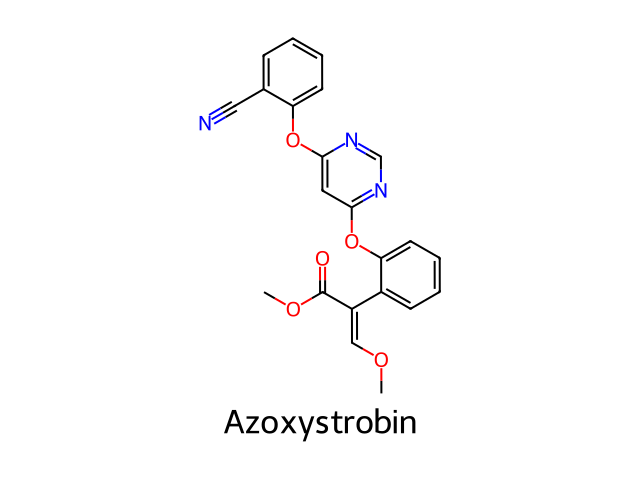
Chemical structure of azoxystrobin

Molecularly imprinted polymer-based electrochemical sensor for the detection of azoxystrobin in aqueous media Permalink

Published in Polymers, 2024

A sensor for the fungicide azoxystrobin in water. The imprinted polymer was grown electrochemically on a thin-film metal electrode from two monomers, aniline and m-phenylenediamine, with azoxystrobin as the template. Detection limit 3.6 nM in tap water; selective for azoxystrobin, with 94–119 % recovery.

Recommended citation: Vu Bao Chau Nguyen, J. Reut, J. Rappich, K. Hinrichs, V. Syritski. Molecularly imprinted polymer-based electrochemical sensor for the detection of azoxystrobin in aqueous media. Polymers 16(10) (2024) 1394. DOI: 10.3390/polym16101394
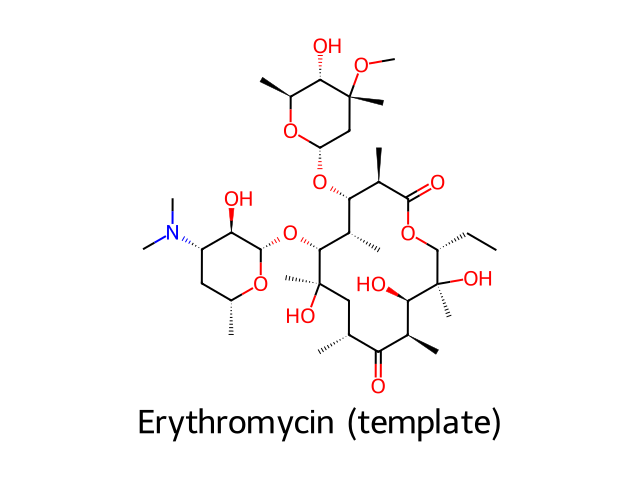
Chemical structure of erythromycin, the template molecule

Molecularly imprinted co-polymer for class-selective electrochemical detection of macrolide antibiotics in aqueous media Permalink

Published in Sensors and Actuators B: Chemical, 2023

One sensor for a whole class of antibiotics, the macrolides. Imprinted with erythromycin, the polymer recognises the large lactone ring that all macrolides share, through reversible boronic acid–diol bonds and weaker non-covalent interactions. It responds about four times more strongly than a non-imprinted control to erythromycin, clarithromycin and azithromycin, with detection limits of 1.1–1.6 nM and 93–108 % recovery.

Recommended citation: Vu Bao Chau Nguyen, A.G. Ayankojo, J. Reut, J. Rappich, A. Furchner, K. Hinrichs, V. Syritski. Molecularly imprinted co-polymer for class-selective electrochemical detection of macrolide antibiotics in aqueous media. Sensors and Actuators B: Chemical 374 (2023) 132768. DOI: 10.1016/j.snb.2022.132768
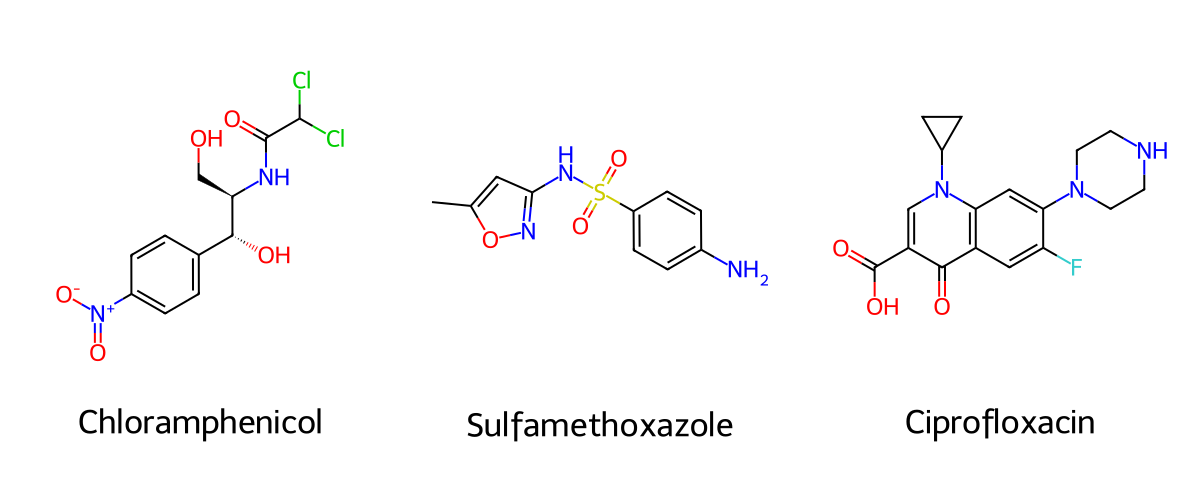
Chemical structures of chloramphenicol, sulfamethoxazole and ciprofloxacin, three antibiotics covered in the review

Advances in detection of antibiotic pollutants in aqueous media using molecular imprinting technique – a review Permalink

Published in Biosensors, 2022

A review of the past decade of label-free sensors that use molecularly imprinted polymers to detect antibiotics in water, across optical, piezoelectric and electrochemical platforms. It compares the best-performing sensors for environmentally important antibiotics, covers computational selection of functional monomers and ways to amplify the signal, and outlines what is needed to move from proof of concept to commercial devices.

Recommended citation: A.G. Ayankojo, J. Reut, Vu Bao Chau Nguyen, R. Boroznjak, V. Syritski. Advances in detection of antibiotic pollutants in aqueous media using molecular imprinting technique – a review. Biosensors 12(7) (2022) 441. DOI: 10.3390/bios12070441

Doctoral Thesis


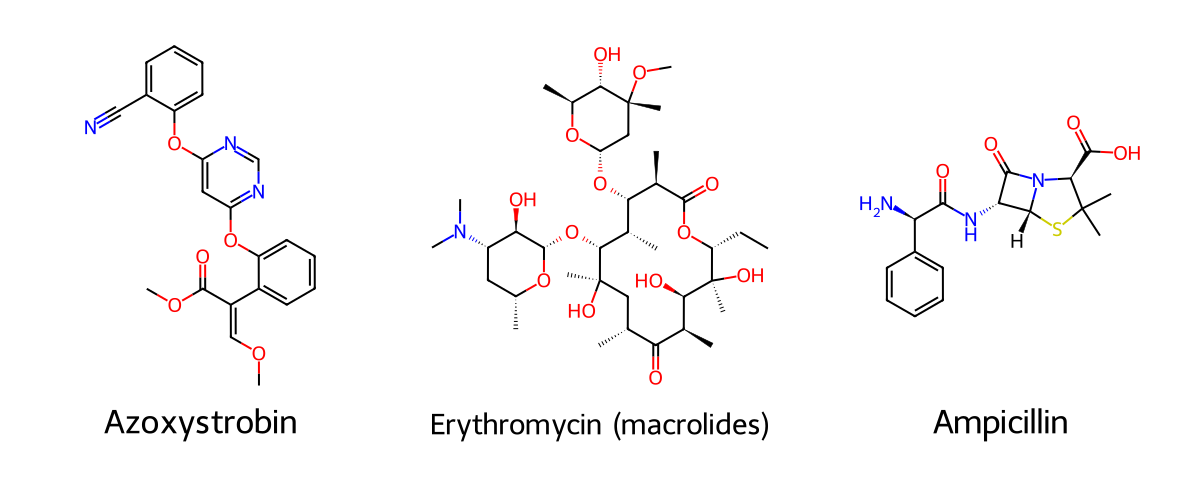
Chemical structures of azoxystrobin, erythromycin and ampicillin, the target molecules of the thesis

Molecularly Imprinted Polymer-modified Electrodes for Electrochemical Sensing of Emerging Aqueous Pollutants Permalink

Published in Tallinn University of Technology (doctoral thesis), 2025

Brings the three sensor papers above together. The thesis develops imprinted-polymer electrochemical sensors for single pollutants (the fungicide azoxystrobin and the antibiotic ampicillin) and for a whole antibiotic class (the macrolides), uses quantum-chemical modelling to choose functional monomers, and shows that a ruthenium oxide electrode can act as its own redox probe, so no added probe solution is needed.

Recommended citation: Vu Bao Chau Nguyen. Molecularly Imprinted Polymer-modified Electrodes for Electrochemical Sensing of Emerging Aqueous Pollutants. Doctoral thesis 64/2025, Tallinn University of Technology, TalTech Press (2025). DOI: 10.23658/taltech.64/2025